Mysterious, brilliantly blue flashes of light known as Luminous Fast Blue Optical Transients (LFBOTs) have puzzled astronomers since their discovery. These intense explosions appear suddenly, shine with extraordinary brightness in blue wavelengths, and fade within days. A compelling new hypothesis suggests they may result from a black hole or neutron star crashing into one of the universe's hottest stars. This Q&A explores the nature of these enigmatic events, the science behind the collision theory, and what it could mean for our understanding of the cosmos.
What Are Luminous Fast Blue Optical Transients (LFBOTs)?
Luminous Fast Blue Optical Transients, or LFBOTs, are a rare class of cosmic explosions first identified in 2018 with the event AT2018cow, nicknamed “the Cow.” They are characterized by their intense brightness—up to 100 times that of a typical supernova—and their rapid evolution: they peak in just a few days and fade completely within a couple of weeks. Unlike most stellar explosions, LFBOTs emit most of their energy in blue and ultraviolet light, giving them a distinct blue hue. They also produce strong radio and X-ray emissions, suggesting a central engine like a black hole or neutron star. Their origin has been a mystery, but recent simulations point to a dramatic collision scenario that could explain their unique properties.
What Is the New Hypothesis for the Cause of LFBOTs?
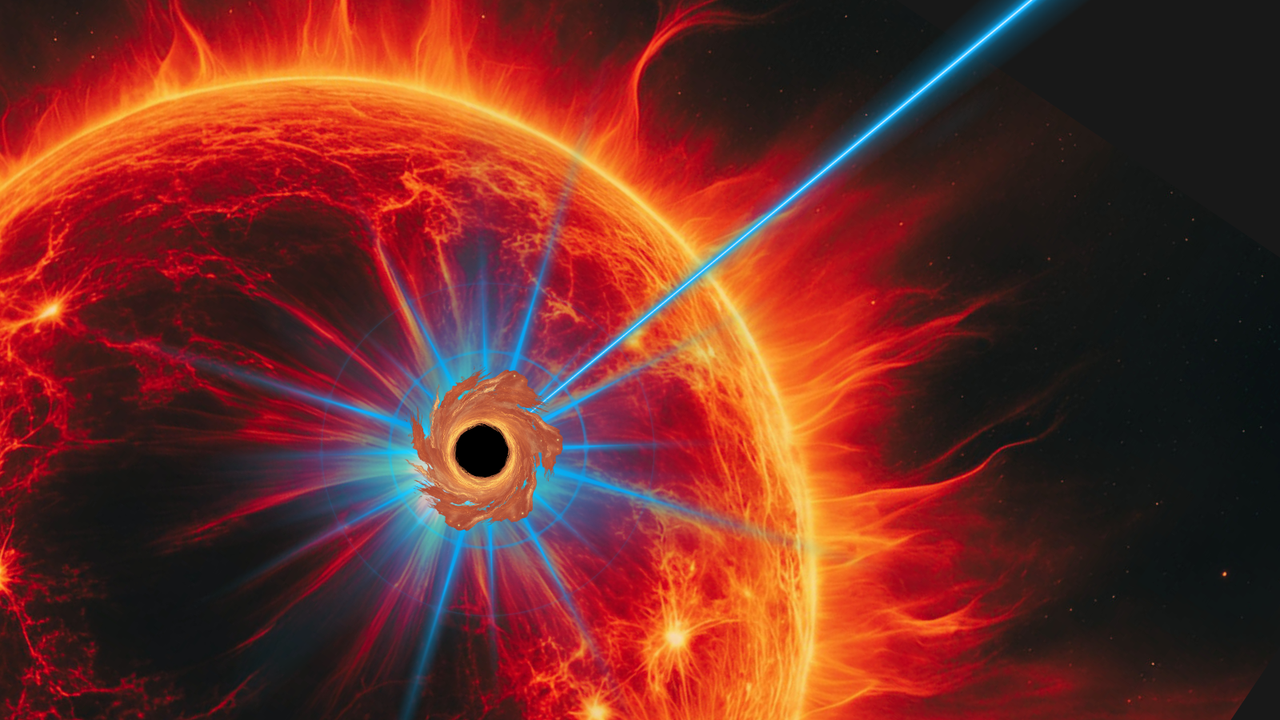
The leading new hypothesis, proposed by astrophysicists, suggests that LFBOTs occur when a compact object—either a black hole or a neutron star—slams into one of the universe's hottest types of stars. These stars, known as Wolf–Rayet or O-type stars, have surface temperatures exceeding 30,000 K and are extremely massive (up to 100 times the Sun's mass). The collision would trigger a violent explosion as the compact object plows through the star's dense interior, heating material to millions of degrees and generating the brilliant blue flash. Computer models show that such an event can reproduce the rapid rise and fall in brightness, the blue color, and the subsequent afterglow observed in LFBOTs. This is a significant departure from earlier theories involving supernovae or tidal disruption events.
How Common Are LFBOTs in the Universe?
LFBOTs are exceedingly rare. As of 2025, only a handful of such events have been detected, with the most famous being AT2018cow, AT2020mrf, and AT2023fhn. Surveys like the Zwicky Transient Facility (ZTF) estimate that LFBOTs occur roughly once every 100,000 years per galaxy—far less frequent than regular supernovae, which happen about once per century in a Milky Way-like galaxy. Their rarity is partly why they are so difficult to study; telescopes must be pointed at the right spot at the right time. However, their extreme brightness makes them visible across billions of light-years, so even one event per galaxy per eon yields enough discoveries for analysis.
What Role Do Black Holes and Neutron Stars Play in This Scenario?
In the collision hypothesis, black holes or neutron stars serve as the “bullet” that triggers the explosion. These compact objects are the remnants of massive stars that have already collapsed. When they encounter a hot, massive star, they can be captured into a tight orbit due to gravitational interactions. Eventually, they plunge directly into the star’s core, depositing immense kinetic energy. For a black hole, the process is especially violent because it can accrete stellar material, producing jets and high-energy emissions. For a neutron star, the collision may cause its own destruction or a merger, releasing a burst of energy. Both scenarios naturally explain the central engine that powers the LFBOT’s prolonged blue emission and its X-ray/radio signatures—phenomena that ordinary supernovae cannot account for.
Why Do These Flashes Appear So Bright and Blue?
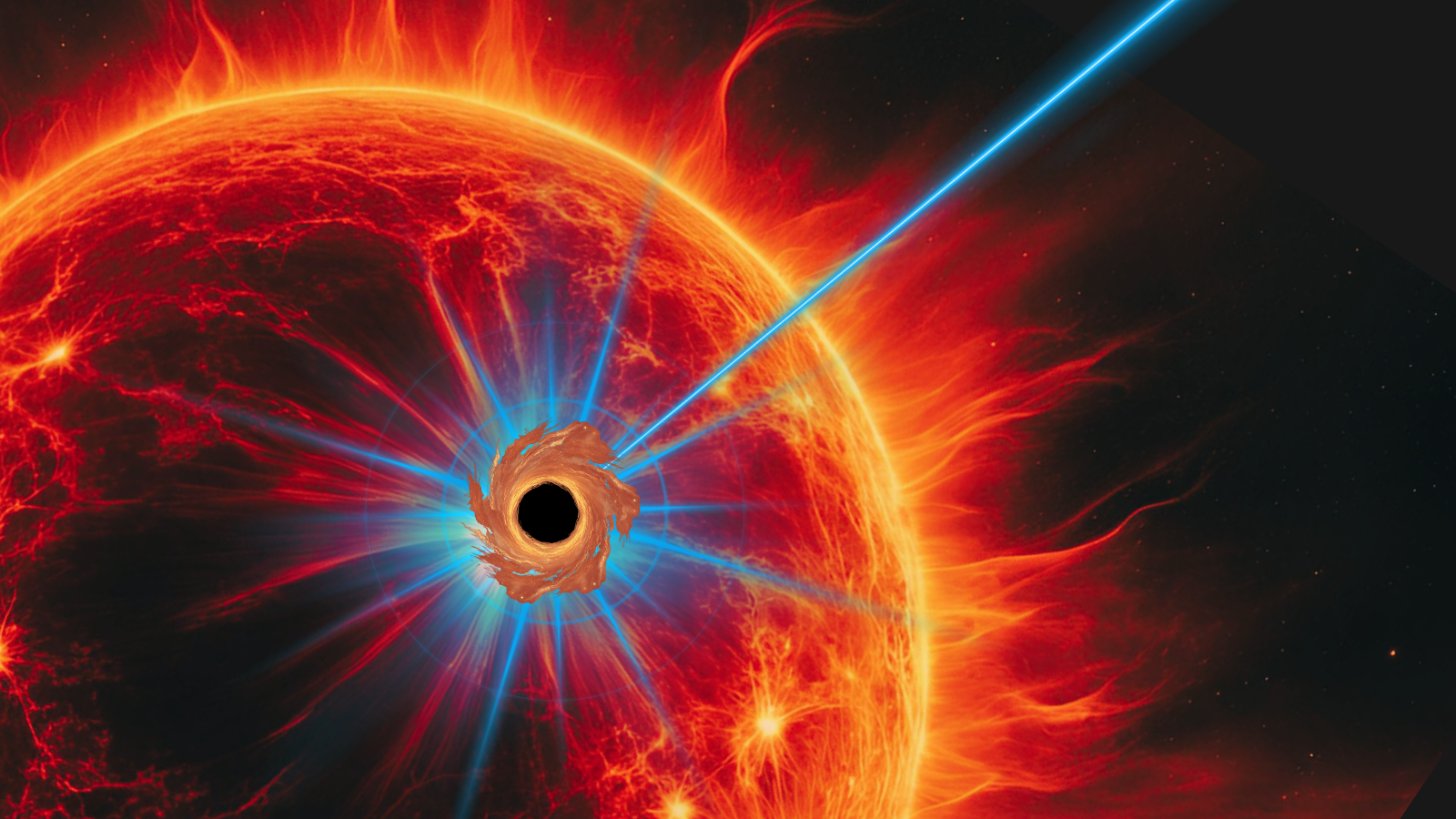
The brightness and blue color of LFBOTs stem from the extreme temperatures generated in the collision. When a black hole or neutron star plows into a star, it shocks and compresses the stellar gas to temperatures exceeding 100,000 K. At such high temperatures, the radiation peaks in the blue and ultraviolet wavelengths, giving the explosion its characteristic blue hue. Additionally, the compact object’s intense gravity can funnel material into an accretion disk or jet, which shines brightly across the electromagnetic spectrum. Unlike supernovae, which emit mostly in visible and infrared, LFBOTs are dominated by blue light for the first few days because the expanding debris is still very hot. As the material cools, the color shifts redder, but the initial flash is unmistakably blue.
How Do Scientists Study These Rare Cosmic Events?
Astronomers use a combination of wide-field surveys and rapid follow-up observations to catch LFBOTs. Automated telescopes like those of the Zwicky Transient Facility (ZTF) scan large areas of sky every night, looking for sudden bright spots. When a candidate is identified, alerts go out to observatories such as the Hubble Space Telescope, the Chandra X-ray Observatory, and radio arrays like the Very Large Array. These facilities take time-series data across multiple wavelengths, from radio to X-ray, to build a light curve and spectrum. By modeling the rise and decay of brightness, and the emission lines, scientists can test scenarios like the black hole–star collision. Advanced computer simulations also play a key role, allowing researchers to compare predictions with observations and refine their understanding.
What Could This Discovery Mean for Astrophysics?
If the collision hypothesis is confirmed, it would revolutionize our understanding of how compact objects interact with stars. It would imply that black holes and neutron stars can form inside dense stellar environments and merge with other stars more often than previously thought. This could also explain other transient phenomena, like certain fast radio bursts or gamma-ray bursts. Moreover, LFBOTs might serve as probes for studying the properties of hot, massive stars and the physics of accretion and jets. The discovery would open a new window into the life cycles of stars and the dynamics of binary systems in galaxies. Ultimately, it underscores the dynamic and violent universe we inhabit, where even the faintest blue flash can reveal a cataclysmic collision between cosmic titans.