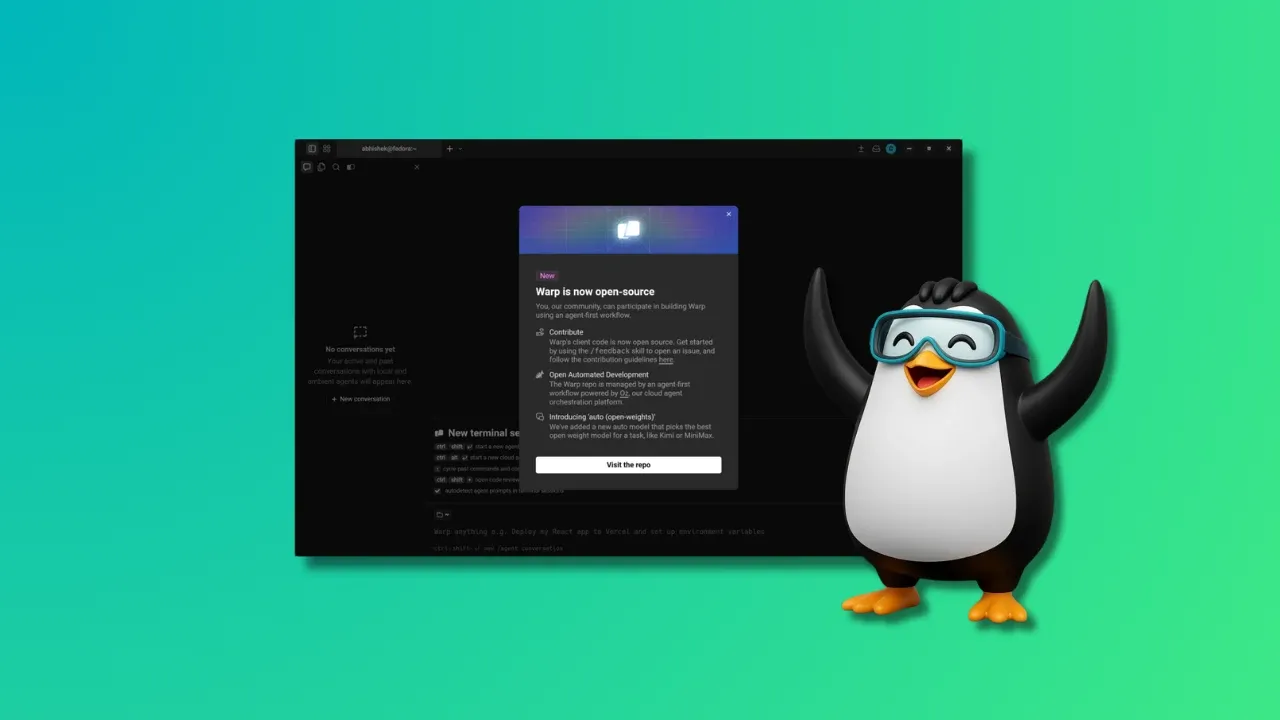
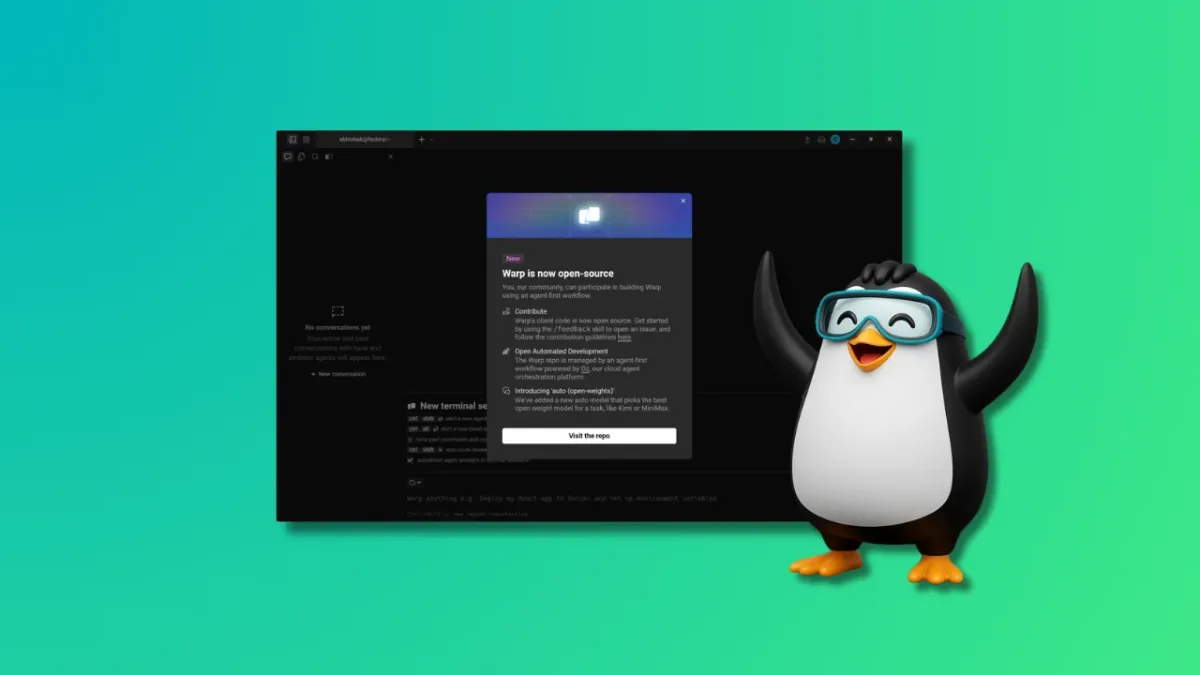
In a significant move for developer tools, Warp has released its terminal client as open source software. The codebase is now available on GitHub, marking a shift toward community involvement—but with a twist: Warp's contribution model departs from traditional open source practices. Instead of expecting human contributors to write code directly, the company envisions a future where AI agents handle implementation while humans focus on higher-level tasks like feature decisions and validation.
The Unconventional Open Source Contribution Model
According to Warp, the main bottleneck in development is no longer writing code but the human-led tasks that remain essential: deciding on features, shaping specifications, and verifying software behavior. To address this, Warp is leaning into AI agents to carry out the implementation, freeing human contributors to concentrate on ideas, specification work, and review. The company expressed confidence that code generated by its own AI orchestration platform, Oz—guided by Warp's rules and verification processes—can help contributors deliver features correctly and efficiently.
What Is Oz?
Oz is Warp's cloud-based agent orchestration platform, announced earlier this year. It allows users to run multiple coding agents in parallel within the cloud, offering full visibility and control over their actions. Warp encourages contributors to use Oz because it already has the necessary context and built-in checks to support this workflow, though other coding agents are welcome as well.
Why Open Source?
Zach Lloyd, CEO of Warp, explained the rationale: “Open-sourcing is fundamentally coming from our desire to build a successful business. We are competing with other highly funded, closed-source competitors, and we think opening and providing the resources for the community to improve Warp is a smart way for us to accelerate product development.” This strategic decision aims to leverage community input and innovation to keep pace with rival terminals while maintaining a sustainable business model.
Technical Details: Licensing and Repository Structure
The client codebase is hosted at github.com/warpdotdev/warp with a split licensing scheme. The UI framework—comprising the warpui_core and warpui crates—is released under the MIT license, while the rest of the codebase falls under the AGPLv3 license. This approach balances openness with protection for core components.
OpenAI is the founding sponsor of the repository, and the agentic contribution workflows are powered by GPT models. However, Warp emphasizes that other coding agents are welcome too—though they recommend using Oz for its embedded context and verification mechanisms tailored to this workflow.
Expanded Open Source Model Support
Alongside the open sourcing, Warp is broadening its support for open source models. New additions include Kimi, MiniMax, and Qwen, plus a new “auto (open)” routing option that automatically selects the best open model for a given task. A settings file for programmatic control and easier portability across devices is also being introduced, making it simpler for users to configure their environment.
Background: What Is Warp?
Warp is a modern terminal and agentic development environment built in Rust. It runs on Linux, Windows, and macOS, featuring a block-based command interface and built-in support for AI coding agents such as Claude Code, Codex, and Gemini CLI. The open sourcing marks a new chapter for the project, inviting developers worldwide to shape its evolution—albeit through a novel contribution paradigm.
Looking Ahead
With the code now public and a clear focus on AI-driven collaboration, Warp aims to accelerate development while fostering a community that contributes ideas and oversight rather than just code. Whether this model resonates with developers remains to be seen, but it represents a bold experiment in open source governance. Interested contributors can explore the repository, join the discussion, and help define the future of terminal-based development.